
Dog Sledding Fun Facts: The Ultimate Beginner’s Guide to Mushing
Dog sledding fun facts often begin with Zhokhov, a 9,500-year-old dog whose remains in Siberia pushed the story of mushing’s origins back thousands of years. Researchers also found sledding equipment at the same site, and that evidence connects ancient Siberian dogs to the sled teams we see today.
I’ve gathered the dog sledding information every beginner wants, including where dog sledding began and how it works. We’ll cover dog mushing, the commands mushers use, and the gear that helps teams travel safely. This guide will show you what makes dog sledding fun and why this centuries-old tradition still fascinates adventurers everywhere.
What Is Dog Mushing, and Where Did It Begin?
“At each of these post-houses they keep some 40 dogs of great size, in fact not much smaller than donkeys, and these dogs draw the couriers over the day’s journey from post-house to post-house, and I will tell you how.” — Marco Polo, 13th-century Venetian explorer and travel writer
So, what exactly is dog mushing? Mushing refers to any sport or method of transport powered by dogs, whether they pull a cart, pulk, scooter, or sled. The term comes from the French word “marche,” meaning “walk” or “move.” French-Canadian coureurs des bois once used it to send dog teams forward. English speakers later turned the word into “mush,” and dog-team drivers became known as mushers. I find it funny that mushers rarely shout “mush” on the trail today, even though the term remains shorthand for the whole sport. The dogs have their own naming difference. “Husky” serves as a broad label for northern-type breeds, while “Siberian Husky” refers to one breed recognized by the American Kennel Club. That difference answers a common question beginners have before their first ride.
Dogs have lived with humans in the Arctic for roughly 17,000 years. Evidence of sled-specific equipment appears later. A sled-runner fragment from Siberia’s High Arctic Zhokhov site dates by radiocarbon to 6480-6175 BCE, while dog remains from the same site date back to 7000 BCE. Some ivory artifacts, which may have held sled reins, are older still and date to around 12,000 years ago. Hunters at Zhokhov seem to have intentionally bred two types of dogs: heavier animals, about 29 kilograms, to hunt polar bears and lighter dogs, 20 to 25 kilograms, to pull sleds without overheating. That weight range still describes a capable sled dog. Dog sledding then spread from this Siberian location over several centuries and eventually reached Russia, Alaska, Canada, Greenland, and Scandinavia. The evidence shows how long this breeding practice has existed.
Dog teams carried more than cargo. Communities along the Chukchi Sea coast kept dogs as early as 1,500 years ago and buried them with humans as a sign of respect. Local terrain shaped hitching styles. Inuit communities in eastern Canada and Greenland used a fan hitch that spread dogs wide and gave them room to maneuver across shifting sea ice. Khanty people in western Siberia used a line of seven dogs, with one leader followed by six dogs in pairs. The Thule people perfected dog traction between 1200 and 1400, allowing larger teams to haul heavier loads and travel faster from Chukotka to Greenland. Gwich’in hunters in northern Canada and Alaska kept teams of five to seven dogs to haul meat and supplies. A family without a team was considered poor. French trappers who arrived in the 1600s adopted similar methods from Iroquois hunters and extended trading routes deeper into the wilderness.
Dog Sledding Fun Facts That Made History
Gold rushes first brought sled dogs fame beyond the Arctic. Why sled dogs were sought after during the Klondike Gold Rush came down to simple math: prospectors needed a year’s supply of provisions, roughly 2,000 pounds per person, and had to haul it through snow without usable roads. A capable sled dog sold for $100 to $200, which equals roughly $350,000 to $700,000 today. The shortage became so severe that Seattle pet owners feared thieves would steal their dogs and ship them north. A mastiff named Julian reportedly pulled a 1,000-pound sled alone through howling wind. Dog teams also continued delivering mail for the U.S. Postal Service long after the gold ran out.
Polar exploration expanded the role of dog teams. They carried expedition gear across ice fields where other forms of transport could not withstand the cold or terrain.
Balto, Togo, and the teams behind the 1925 serum run were closely tied to Leonhard Seppala, a Norwegian musher in Nome. He recognized that smaller Siberian dogs performed better than the bulkier malamutes favored during the Gold Rush. Diphtheria threatened Nome in 1925, and Seppala with his lead dog, Togo, covered a critical section of the relay that carried serum across the ice. The American Kennel Club recognized the Siberian Husky as a separate breed in 1930, largely because of Seppala’s bloodlines.
How working sled teams helped shape modern sled dog racing begins with Scotty Allan. He co-founded the Nome Kennel Club in 1907 and helped establish the All Alaska Sweepstakes, a 400-mile race held annually until 1917. Tandem-harnessed racing teams as they exist today date back only about 150 years. Racing speeds rose from five-minute miles in the early 1900s to three-minute miles by the end of the century. The fastest teams used dogs weighing between 20 and 27 kilograms because they handled heat best.
How Does Dog Sledding Work?
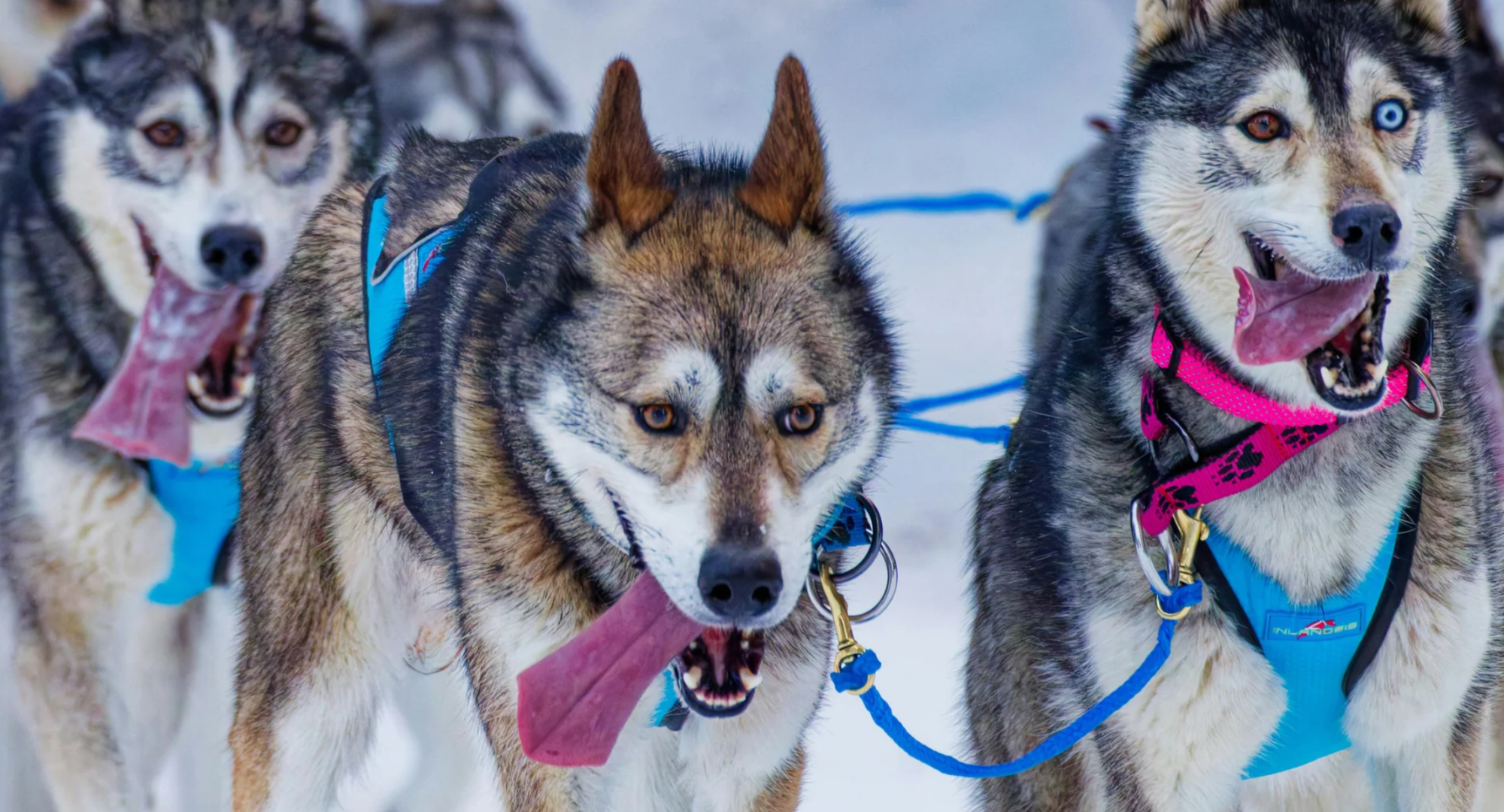
Not every sled dog is a Siberian husky. The Alaskan Husky is a mixed breed developed for speed and endurance, and it dominates long races such as the Iditarod. Malamutes haul heavy freight, while Eurohounds, crossed with German Shorthaired Pointers, sprint quickly. Labrador Retrievers can also learn recreational mushing with proper training.
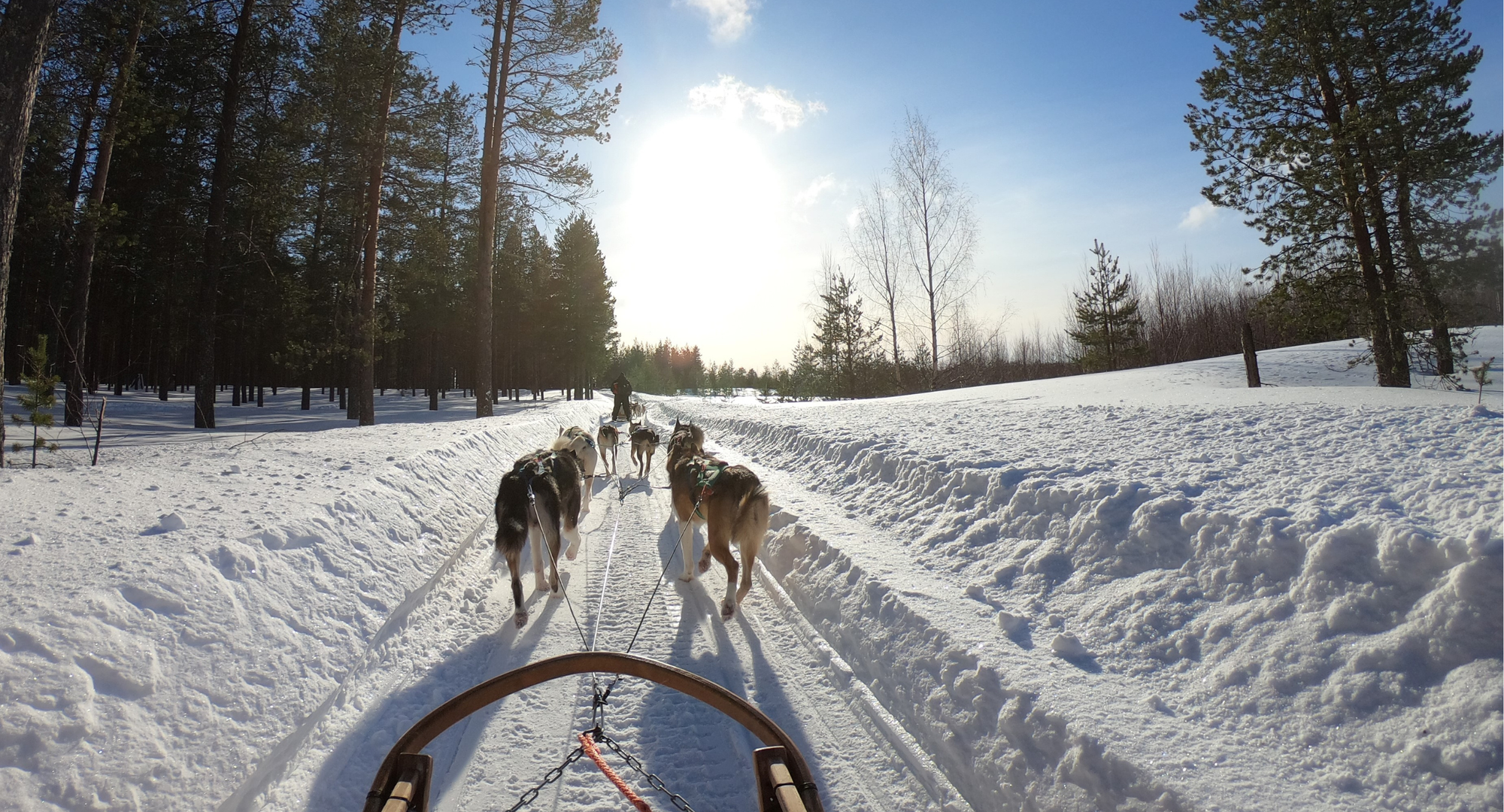
Each dog on a team has a job. Lead dogs set the pace and follow commands. Swing dogs guide turns directly behind them, while team dogs provide pulling power. Wheel dogs work closest to the sled and carry the heaviest strain.
Terrain determines the layout. Historic fan hitches spread 12 to 15 dogs across open ice, while modern teams usually use about eight dogs in paired tandem file on narrow, wooded trails.
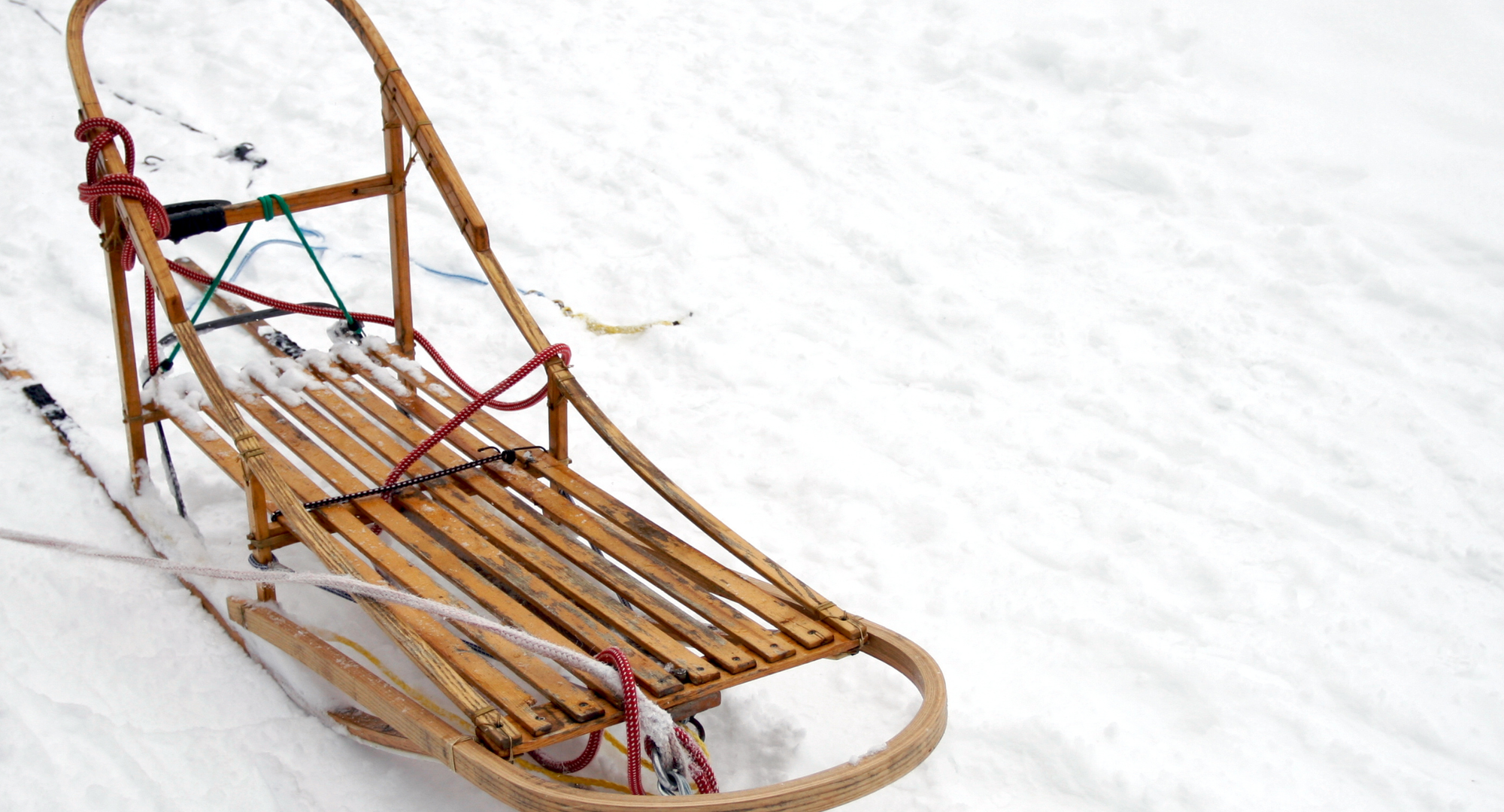
Gear holds the team together. Wooden or carbon runners glide across the snow, and a claw-shaped brake slows the team. The gangline connects each harness through tuglines and necklines, while a snow hook secures the sled when parked.
Commands replace reins completely. “Hike” starts the team, “gee” turns right, “haw” turns left, and “whoa” stops everyone.
Your First Dog Sledding Trip: What to Know Before You Go
Choosing the right outfitter matters just as much as the dogs. The best operators care for their huskies throughout the year, provide training and veterinary care, and keep tour groups small for ethical, enjoyable experiences. Ask how they feed the dogs, whether the handlers have a real connection with the team, and if the schedule includes rest between runs.
Each outfitter has its own snow requirements, age limits, and fitness rules. Some kennels require visitors to be at least two years old and ask anyone under eighteen to ride with a parent. Other operators require guests to be older than ten. Weight limits also apply, often ranging from 350 to 425 pounds per sled based on the model. Prices vary widely. A Colorado dinner ride costs $345 to $395 per adult, while overnight-trip gear rentals elsewhere cost $135 per adult.
The right clothing can prevent a miserable ride. Wear wool or synthetic base layers with two pairs of socks, then add windproof outerwear and insulated boots rated for below-freezing temperatures. Liner gloves under mittens and a buff or balaclava provide added protection. Leave cotton behind because it holds moisture and can chill you quickly.
Early arrival gives you time to meet the team and take in the safety briefing without rushing. Guides explain posture, braking, and how to stand near ganglines before the group leaves the yard.
Keep your knees slightly bent, grip the handlebar with both hands, and lean into turns as a cyclist would. Apply the brake gently when the gangline goes slack. Maintain steady pressure on descents instead of braking hard at the last second.
Tell your guide as soon as you feel cold or uneasy, before the situation becomes difficult. Take photos only at designated stops because both hands must stay on the handlebar while the sled is moving.
Conclusion
These dog sledding fun facts span Zhokhov’s ancient dogs and Seppala’s serum run. They reveal a sport built on loyalty and grit. Learning what dog mushing is, along with its commands, gear, and team roles, gives you the preparation to turn a simple ride into an unforgettable experience. Book your first trip with an ethical outfitter, pack well, and listen closely during the briefing. This centuries-old tradition still rewards curious beginners who arrive ready.